

—— Overview
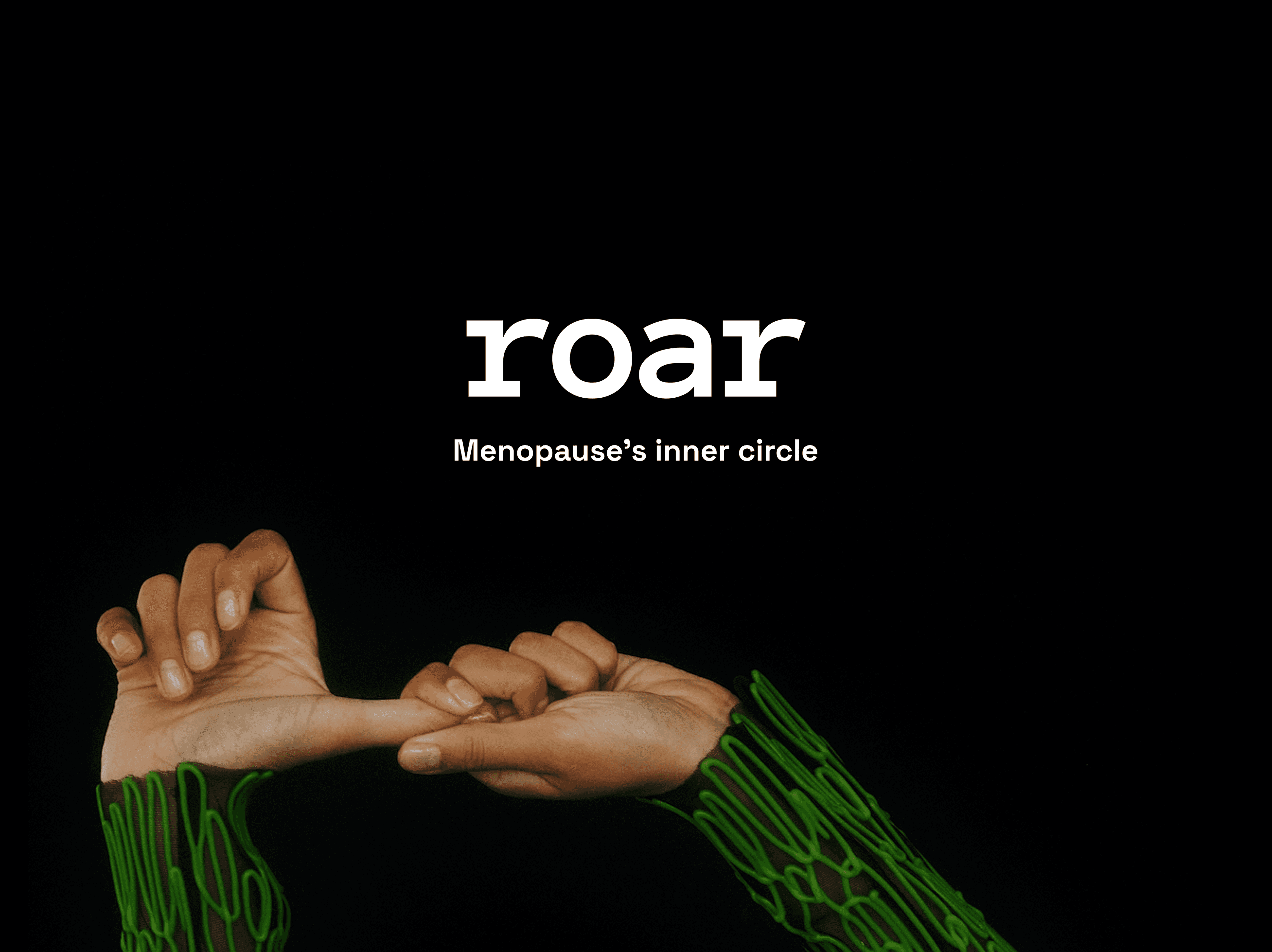
Roar is a community-driven women's health platform designed to give women a trusted, personalized space to connect, share experiences, and build their own health journey, starting with menopause. It grew out of a real gap: when one of our co-founders went through menopause, there was nowhere to go for honest, peer-grounded information. Doctors gave clinical answers. Friends gave conflicting opinions. The internet gave anxiety. Roar was the platform she wished had existed.
Client
roar / passion project
Date
Role
Co-Designer and UX Strategist
Service
UX Strategy, Product Design, UI Design
Contribution
Responsible for product vision sessions, experience strategy, onboarding flow design, Circles architecture, UI design across web and mobile surfaces, and AI intake companion prototype (2025 extension)

—— Brief
Women going through menopause have no trusted, peer-led space to find community, make sense of conflicting information, and build a health journey that actually reflects how they live.
Menopause affects roughly half the global population yet remains one of the most underserved areas of women's health. Women navigating it are caught between clinical language that doesn't translate to lived experience and informal advice that lacks credibility. Meanwhile, the products and platforms built for them tend to either medicalize the experience or dress it up in lifestyle aesthetics. Neither actually helps a woman figure out what is happening to her body, what to call it, or who else is going through the same thing. Roar was designed to close that gap.
15
Friends and family interviewed
45
test users on PoC launch day
89
women signed up for the mailing list in the first month
—— CHALLENGE
The core tension was trust. Women in this space have been burned before by wellness apps that commodify vulnerability, by social platforms that algorithmically bury nuanced health conversations, and by a broader culture that treats menopause as something to whisper about. Any platform trying to serve this community would need to earn trust before it asked for anything. Layered on top of that: the audience spans a wide age range with varying levels of tech fluency. Many of these women don't yet have the vocabulary for what they're experiencing. They don't know if what they're feeling is perimenopause or something else entirely. They don't know what questions to ask their doctor, let alone what to search for in a new app. The design couldn't just be intuitive. It had to be orienting. And the content problem was real. A community app is only as valuable as the conversations happening inside it. Getting women to their first meaningful connection before they bounced was the design challenge underneath every other design challenge.
—— solution
Three things anchored the design direction.
A personalized onboarding flow that did real intake work
Rather than a generic sign-up sequence, we designed an onboarding flow that asked women meaningful questions about their stage, symptoms, preferences, and approach, whether they were on hormone replacement therapy, taking a holistic path, or still figuring it out. The app used those answers to shape their experience from the first screen: the Circles they were shown, the resources surfaced, the community they were placed into, allowing them to feel welcome and bypass any tech resistance from the very beginning. We wanted to teach the community early how to use the space, allowing them to truly integrate and feel welcomed by key personalization.
Circles instead of groups
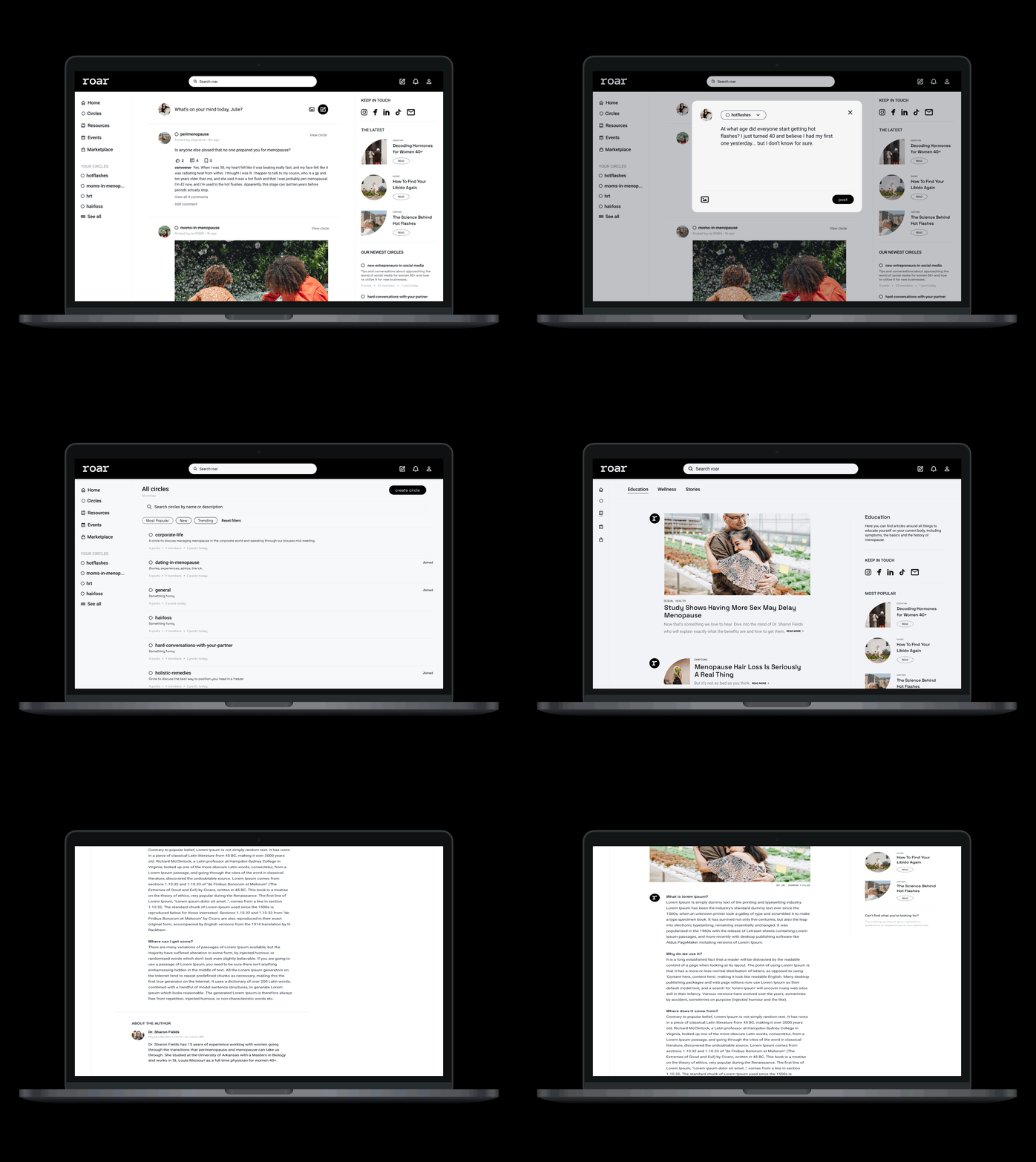
The obvious pattern was the Facebook Group model. We rejected it. A Circle is something you join because it reflects where you are right now, whether that's hot flashes, HRT, perimenopause, holistic approaches, or sleep. It's topic-first and identity-affirming rather than social-graph-first. Each Circle has its own feed, its own community guidelines, and its own keyword taxonomy, giving members real signal without noise. The name itself does quiet UX work: a circle has no head of the table.
A content ecosystem built around education, not just conversation
The newsfeed wasn't just peer posts. It was designed to be a legitimate learning environment, layering in curated articles, embedded definitions, polls, and events hosted by doctors and specialists who could speak to what women were actually experiencing. Every piece of content was source-attributed so women could evaluate where information was coming from and make informed decisions about what to trust. The goal was to make education feel like part of the community rather than a separate destination you had to go find.
—— 4 key design decisions
—— PROCESS
Late 2022 / Early 2023
Founder Sarah identified the gap from lived experience. Early vision sessions with the three of us shaped the core concept: community first, education woven in, personalization from the start.
2023
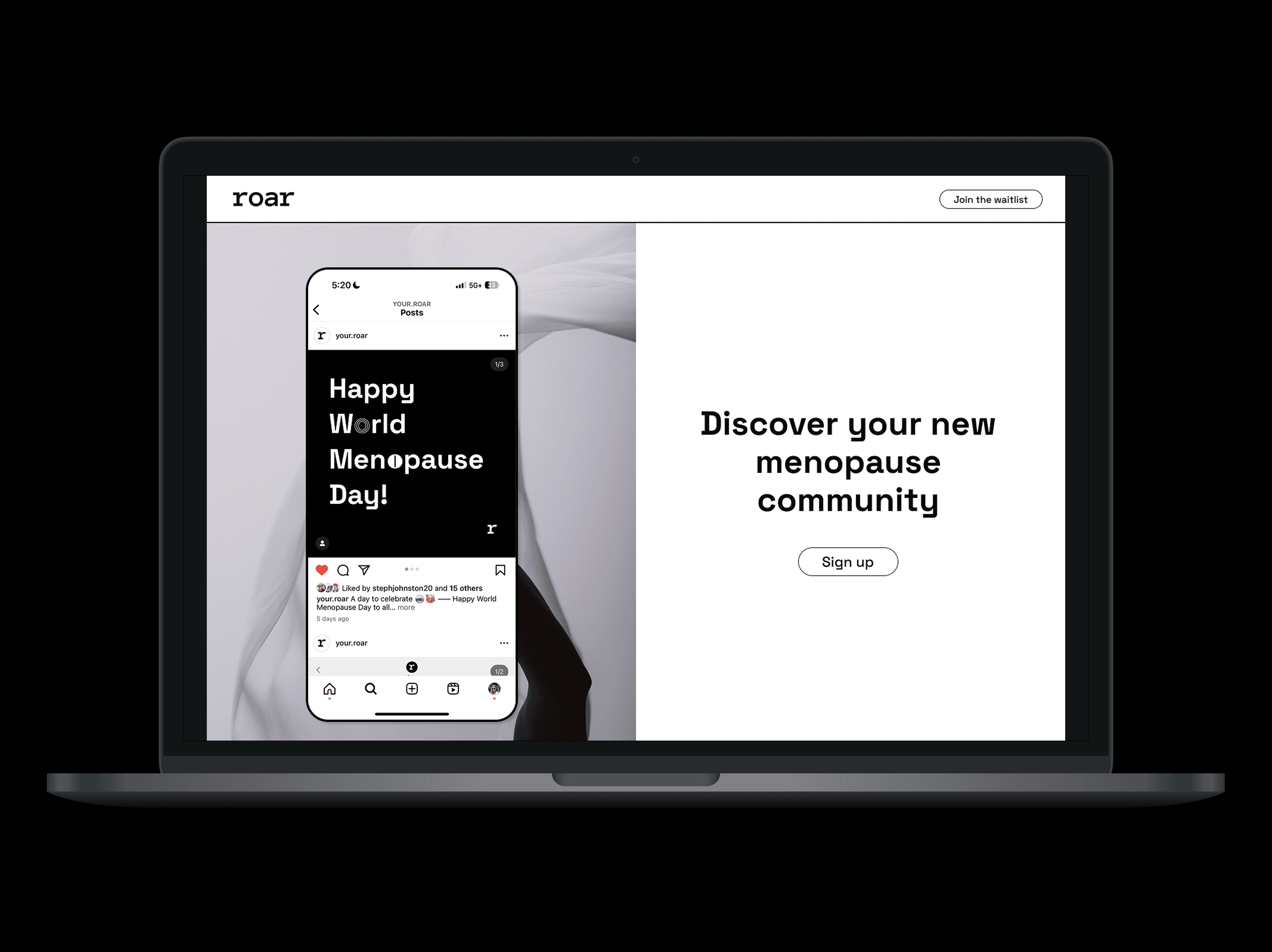
My close friend and I led UX and UI design across the full product surface, including branding and visual design to build the story. We designed the onboarding flow, Circles architecture, newsfeed with multiple content types, Resources section, Events, Search, saved posts, notifications, profile, and a Marketplace concept. The visual language we landed on was editorial and warm: a bold serif wordmark, clean black and white structure, generous white space, and real photography that treated women as full people rather than patients.
2025
With AI prototyping now central to my practice, I returned to Roar and built the AI intake companion prototype in Lovable, extending the original vision into territory that had become newly possible.
2026
With AI prototyping now central to my practice, I returned to Roar and built the AI intake companion prototype in Lovable, extending the original vision into territory that had become newly possible.
The Override
—— DELIVERABLES
Working Retool proof of concept refined with development team, 32-opportunity AI landscape map with scoring framework, top 10 and top 3 opportunity decks for stakeholder presentation, 12-month AI implementation roadmap, weekly stakeholder alignment documentation throughout the engagement.

Women's Health Community
DENVER —— CO